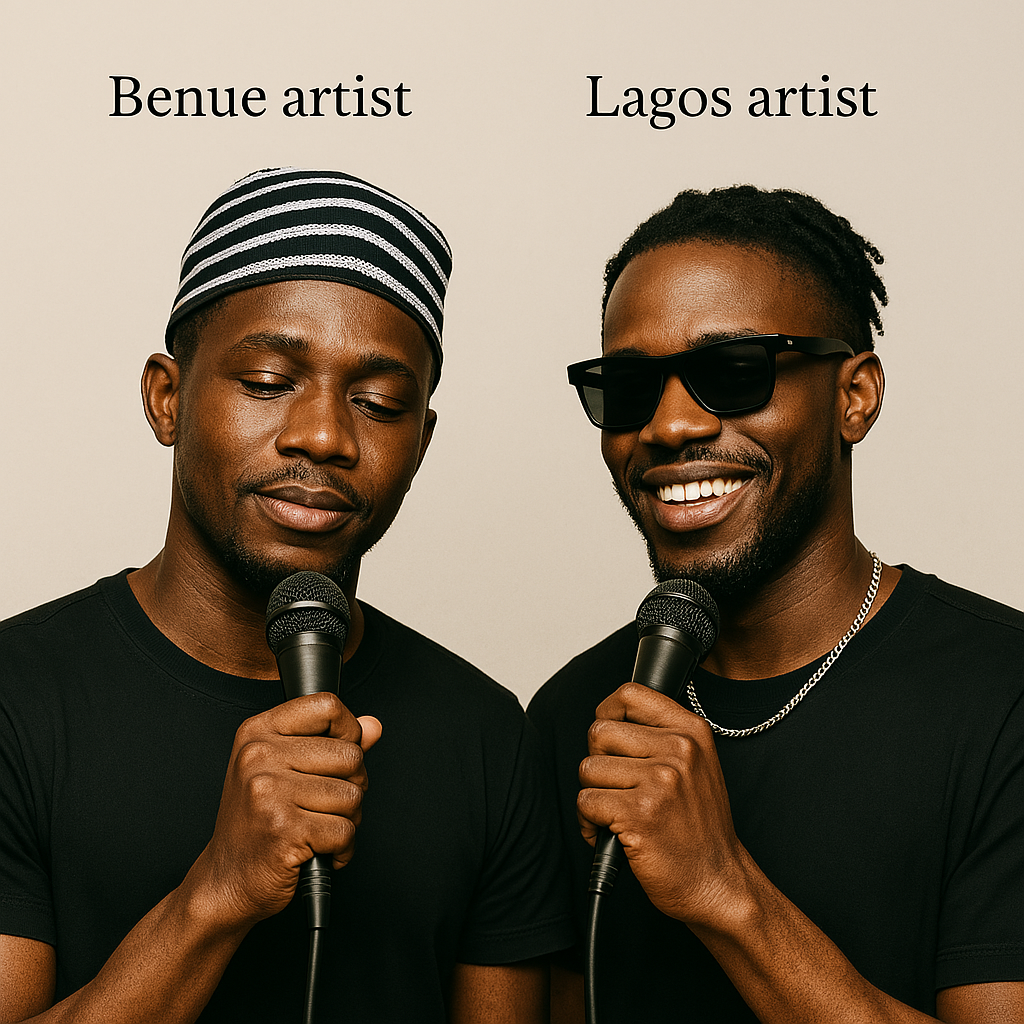
Nigeria’s entertainment industry is one of the biggest in Africa, with different states contributing in their own way. Two states that stand out are Lagos and Benue, but they operate on very different levels. Lagos is known as the center of entertainment in Nigeria, while Benue has a growing industry that is rich in culture and talent.
Many people assume that Benue artists only produce local, traditional music, but that is not true. Benue artists are creating high-quality, mainstream music that can compete with artists from Lagos. The main difference between the two states is exposure and investment, not talent or quality.
 Ad
Lagos: The Entertainment Capital of Nigeria
Lagos is the headquarters of Nigeria’s entertainment industry. It is home to Nollywood, the country’s biggest film industry, and the music scene where stars like Wizkid, Burna Boy, and Davido operate. Lagos attracts international collaborations, with global artists and investors working with Nigerian creatives.
The Lagos State Government invests heavily in entertainment, supporting film projects, concerts, and festivals. The city offers endless opportunities, but the industry is highly competitive. Artists must work hard to stand out because there are so many talented people in Lagos.
Benue: A Growing Entertainment Industry with High-Quality Music
Benue has a strong cultural identity and a rich entertainment scene. The state has produced stars like 2Baba, Blackface Naija who are recognized internationally. Emerging artists like Lady Pesh, Questhood, and Mr. Yukay are making waves with Afrobeats, hip-hop, and contemporary sounds.
Unlike Lagos, where big companies sponsor entertainment, Benue’s industry is community-driven. Artists rely on local support rather than corporate sponsorships. This makes it harder for them to gain national recognition, even though their music is of high standard.
Challenges Facing Benue Artists
One of the biggest challenges for Benue artists is visibility. Lagos-based artists have access to major record labels, media platforms, and sponsorships, while Benue artists struggle to break into the mainstream.
The government is starting to recognize the importance of entertainment. A good example is 2Baba’s appointment as Technical Adviser on Entertainment and Community Outreach. However, more investment is needed to help local artists reach a wider audience.
Benue Artists Are Not Just Producing Local Music
There is a wrong belief that Benue artists only make traditional music, but this is outdated. Many of them are producing radio-ready, high-standard songs that deserve national and international recognition.
Examples include:
Slim Birdie's Lucky, Awe, Kwase wam.
Lady Pesh’s "Nothing Spoil", which showcases Afrobeats mastery.
Odwoods' Today featuring Atela is another masterpiece
Questhood’s "Alhamdulillah", a well-produced hit gaining attention.
Mr Yukay’s "Super Vibes", a landmark album from Igede land.
Kiza Blaqboy featuring Rapizo - Million Times etc
These artists are not just making music for Benue—they are making music for Nigeria and the world. The challenge is not quality, but exposure.
Conclusion: Two Different Entertainment Worlds
While Lagos dominates Nigeria’s entertainment industry with its global reach and massive investments, Benue offers a unique cultural experience that is deeply rooted in tradition. The key difference is scale and exposure—Lagos operates on an international level, while Benue’s entertainment scene remains community-driven.
For Benue to compete nationally, it needs:
More government and private sector investment
Better infrastructure for music, film, and cultural events
Strategic partnerships with Lagos-based entertainment firms
Both states contribute uniquely to Nigeria’s entertainment landscape. Lagos sets the pace for modern entertainment, while Benue preserves cultural heritage.
Benue artists are not just local stars—they are national talents waiting for the right spotlight. It’s time for Nigeria to pay attention.